
The Sota Magnetic Pulser puts out a strong, even field. We measured every setting.
Sota is more open than most makers about what its devices do, so figures for the Sota Magnetic Pulser aren't hard to find. What we can add is an independent measurement. We bought one, put it on our own instruments, and tested it the way we test every device that comes through the lab.
The device is a Sota Instruments Magnetic Pulser, paired with its Paddle accessory. Gauss Labs bought this unit for our own testing. We didn't make it, and nobody paid us to measure it. Everything below comes off calibrated laboratory instruments in our lab, at each of the device's settings. The Magnetic Pulser and the Paddle are both on our public certification registry, so the numbers here are ones you can check.
This device fires strong pulses with long gaps between them.
Before the numbers, it helps to know what kind of device this is, because its readings look nothing like a PEMF mat's. The two are built for different purposes. A mat spreads a gentle field over a large area and pulses many times a second. The Magnetic Pulser is made for the opposite: a strong, brief pulse over a small area, a little less than once or twice a second. That's a design choice, not a shortcoming on either side, and it explains most of what the measurements show: a high peak field, a sharp rising edge, and a low pulse rate.
It has two settings, and both produce a sawtooth wave, a pulse that climbs sharply and then falls away slowly. We measured each setting on its own.
The sawtooth is worth a word, because it may not match the shape you've seen listed for this device. Sota's own specification gives the field's strength and how long each pulse lasts, but not its shape. The sawtooth is what our oscilloscope recorded for the magnetic field itself: a sharp rise, then a gradual fall. A field's shape can differ from the electrical pulse that drives the coil. A coil turns a brief electrical spike into a field that rises fast and then falls away slowly, so a spec sheet and a scope can describe the same device at two different points, and neither is wrong. Where our numbers and Sota's overlap, they line up: Sota rates the field above 7,000 Gauss on the stronger mode, pulsing about every four seconds, and our measurements match on both.
Peak field strength reaches 7.12 kG at the top setting.
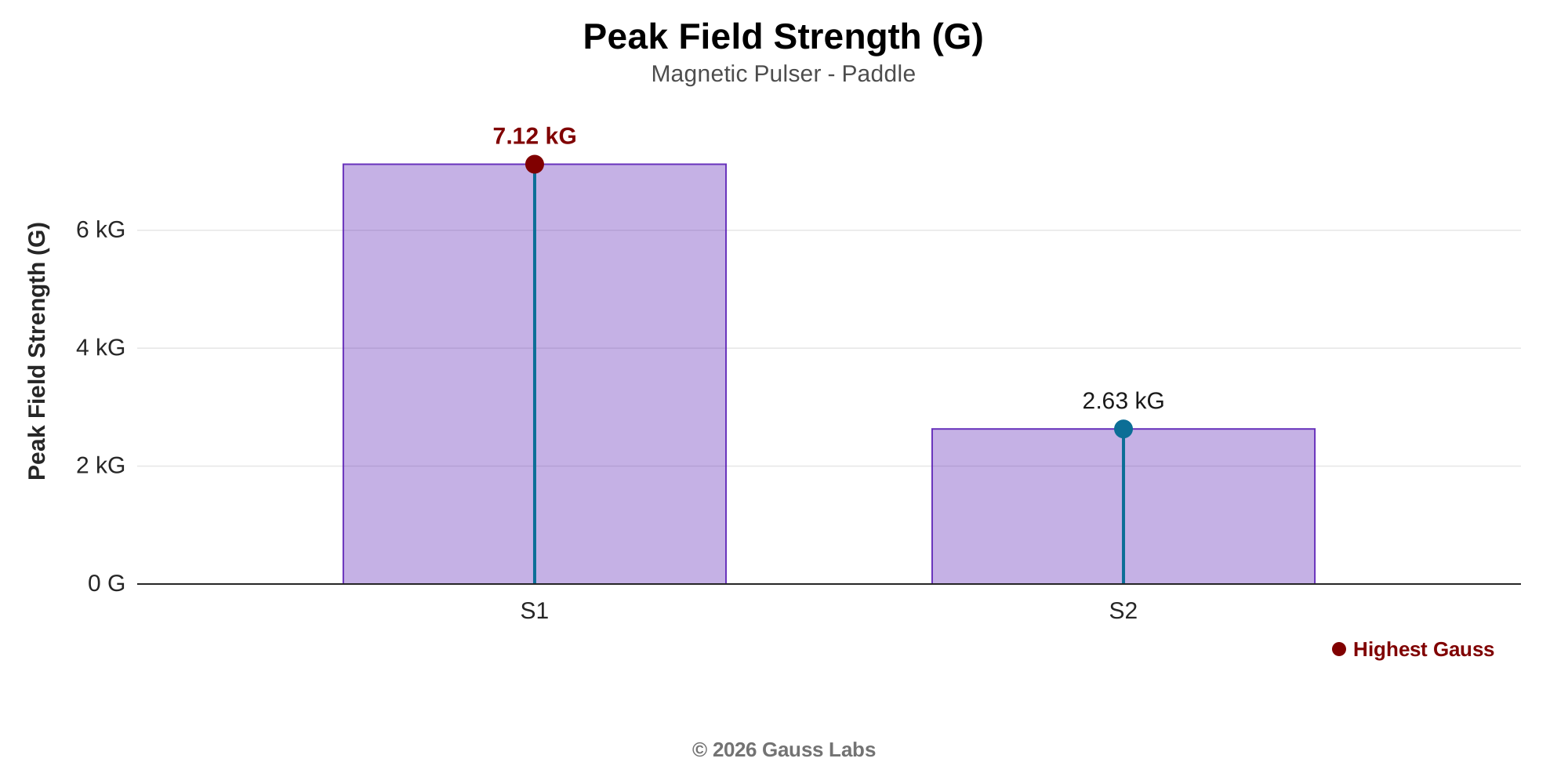
Peak field strength is the strongest the field gets, measured right at the surface of the accessory. At the top setting the Paddle reaches 7.12 kG. At the lower setting it reaches 2.63 kG. Peak is the number a spec sheet almost always leads with, and it's real, but on its own it doesn't tell you how the pulse behaves or how far the field reaches. The rest of the measurements fill that in.
The slew rate drives the stimulus more than the peak does.
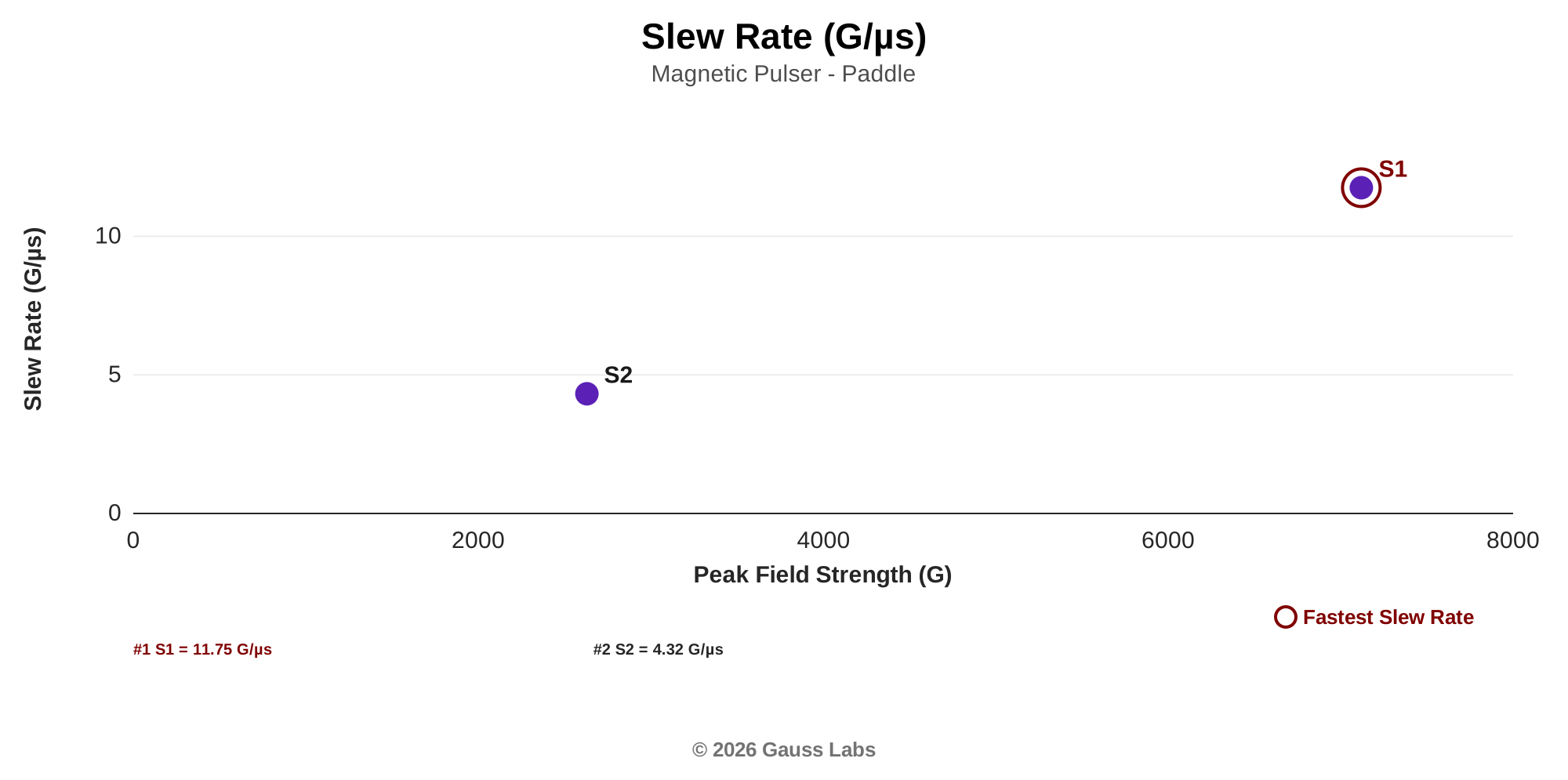
Slew rate is how fast the field climbs during each pulse, measured in Gauss per microsecond. It matters because tissue responds to how quickly a field changes, not to how strong it gets. Think of a hose: a sudden burst hits harder than a slow steady stream, even at the same pressure. We read the slew rate straight off the captured pulse, the way an oscilloscope does, by measuring the field change between the 10 percent and 90 percent points of the rising edge.
The top setting rises at 11.753 G/µs, and the lower setting at 4.318 G/µs. That's the pair of numbers that separates one PEMF device from another far better than peak field does, because two devices can share a peak and still deliver very different pulses. It's also the number almost no spec sheet publishes.
The field is focused at the center and stays strong well beyond it.
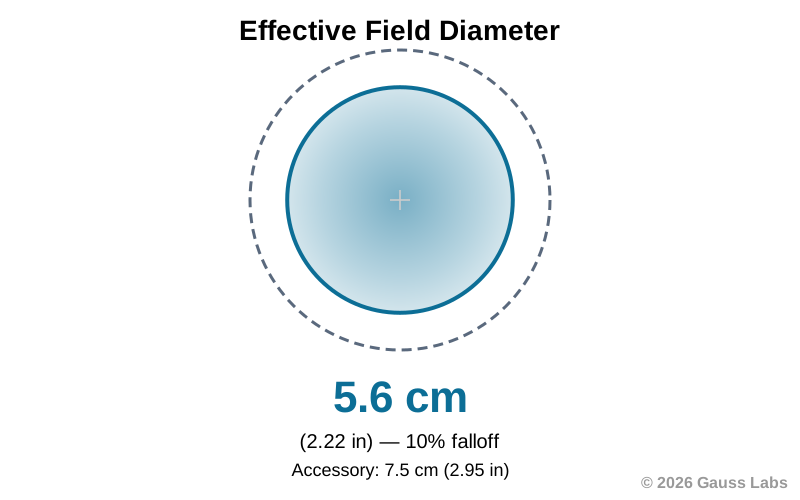
The Paddle is a 75mm (2.95 in) handheld disc, and the center is the focus. That's where the field is strongest, and it's the spot you place over the target. From there it falls off gradually. It's down to half its peak about 19mm (0.75 in) out. The effective field diameter, a standard measure of coverage, marks the span where the field is still at least 10 percent of its peak, which here is 56.8mm (2.24 in). On a device this strong, that 10 percent edge is still a substantial field: about 700 G at the top setting and about 300 G at the lower one. So the strongest field sits at the center, and it stays high across a wide area around it.
The field also reaches upward off the surface. We measured it out to 8 cm (3.1 in) and modeled its reach beyond that. We measure that reach in open air. At these low frequencies a magnetic field passes through the body with little to weaken it, so the reach measured in air is a fair guide to how far the field carries. Reach is set by the coil geometry and the field strength, not by anything the device does to push deeper.
The pulse rate sits below 2 Hz, and the band name is just a label.
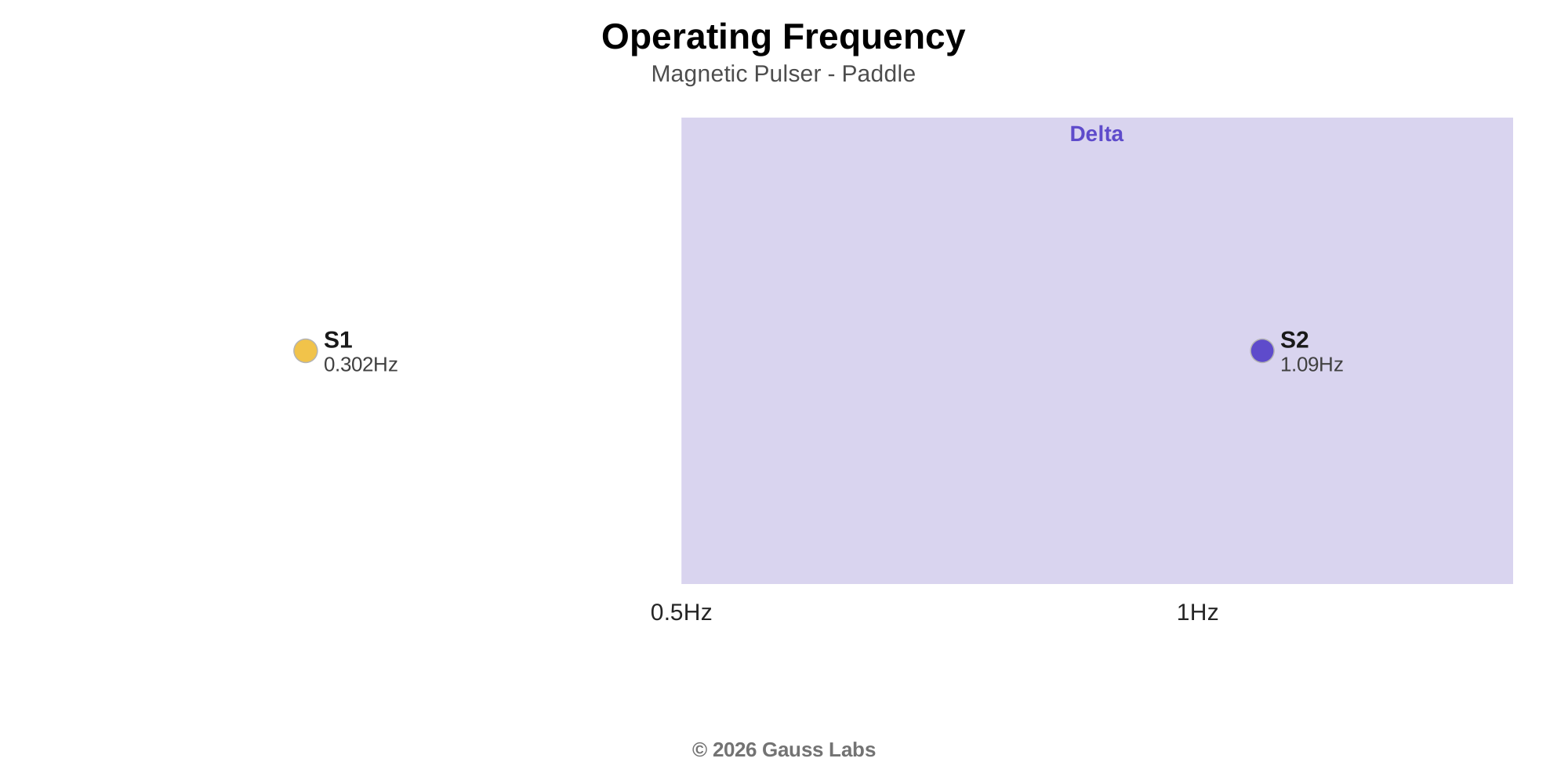
Operating frequency is how many pulses the device fires each second. This one runs at 0.3 Hz at the top setting and 1.09 Hz at the lower one, so a pulse every one to three seconds. That range is often labeled the Delta band, a name borrowed from EEG. The label just marks where the pulse rate falls. Whether a given pulse rate produces a particular effect in the body isn't established, it isn't something we test for or certify, and we don't claim it. We report the rate we measured, and leave it at that.
The peak is high and the rising edge is gradual.
Field symmetry is 95.9 percent, so the field reaches evenly in every direction with almost no bias to one side. Whichever way you turn the Paddle against the body, it puts out about the same field, and that is what makes a small, focused accessory practical to place.
The rising edge is the gradual part. The field takes about 480 microseconds to climb to its 7.12 kG peak, at 11.753 G/µs. That's what the sawtooth shape produces: a sharp electrical spike driving a coil that needs time to reach full field. So this device delivers a strong, even, well-placed field with a gradual rising edge rather than an abrupt one. A single peak Gauss figure would hide that, which is exactly why we measure the rest.
The Magnetic Pulser met our certification standard.
The measurements add up to more than a data sheet. The Magnetic Pulser and the Paddle both earned Gauss Labs certification, which means the device met our standard on every point we evaluated: a real, clean rising edge, a deliberate pulse rate clear of power-line interference, a strong field at the surface, and an even spread of that field in every direction, which we measured at 95.9 percent symmetry. Each of those is a measured pass, not an opinion, and each certification carries its own number. You can see both records, and the full checklist behind them, on the Sota Instruments certification page.
What these numbers are, and what they're for.
These numbers describe what the device puts out: how strong the field is, how fast it changes, how far it reaches, and how often it pulses. They come from the specific unit we tested, and another unit of the same model should land in a similar range rather than on the exact same figures.
This is what we test, and what we certify: the output, measured and reported in full. A spec sheet is a claim. A measurement is a fact, and a fact should show its work.
Want the same measurements on your device?
We test PEMF devices and accessories the same way for any manufacturer, and publish the full report. If you'd like to see what a complete measurement looks like, our example reports are open to read.
Schedule a Call See Example ReportsYou can find figures for this device without much trouble. An independent measurement, taken the same way we measure everything, is what we set out to add.