
Here's exactly what happens after you send us a device.
You know your device works. Your buyers want more than your word for it, which is fair, because a spec sheet is a claim until somebody measures it. Testing at Gauss Labs turns what you know into something you can hand a customer: a measured report on your device and its accessory, and a certification anyone can verify for themselves. Here's the whole path, start to finish, and these are the same nine steps you'll see on your progress bar when you sign in, so you can tell where your job stands without asking us.
What we can test.
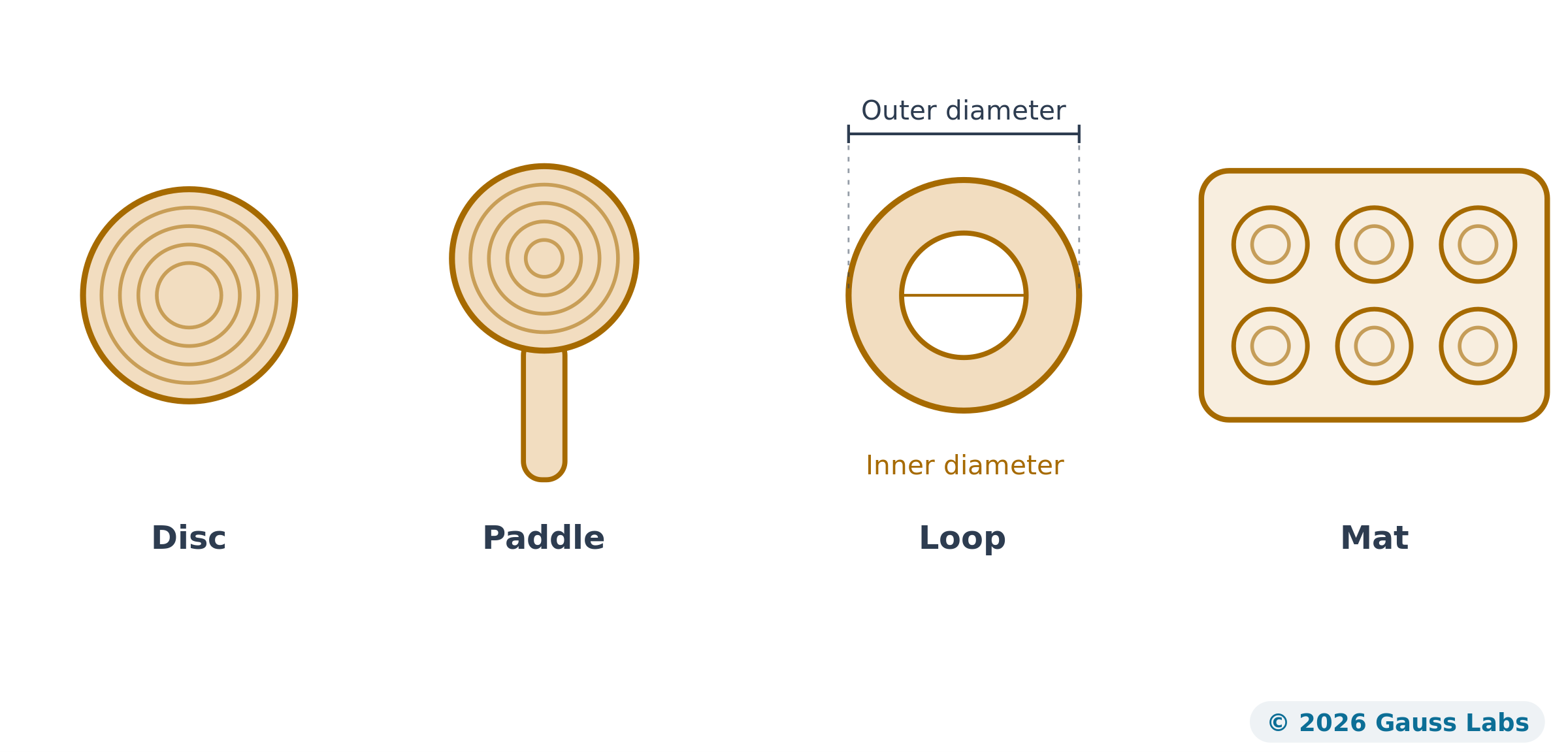
We measure loops, butterflies, mats, coil arrays, discs, and one-off coil builds, on high-Gauss machines and low-Gauss ones alike. The scan grid and the instruments change with the hardware, and the method doesn't. If you've built something unusual, tell us about it, because we've probably measured something close.
What we need from you before you ship anything.
A typical engagement runs two to four weeks, and it moves fastest when three things arrive with the hardware.
- The device and the accessory together. A PEMF system is two halves, since the device makes the pulse and the accessory carries the field to the body. Peak field, slew rate, symmetry, and reach all come from the two working together, so we measure a specific device paired with a specific accessory. Swap the accessory and it's a new pairing, which means a new test, and the difference is not small: on one device we measured, the accessory, not the device, set the peak field.
- Every setting you want measured. We measure each one on its own, because a device can behave very differently at its low and high ends.
- Coil resistance and inductance, if your accessory exposes them. They let us estimate the coil's time constant and its heat load. A sealed unit is fine too: those checks get marked "not evaluated," and they never count against you.
The nine steps, and what happens in each.
1. Intake: you tell us exactly what's being tested.
We capture the device model and its settings, the accessory and its dimensions, and the electrical facts the analysis needs. This is the step that decides what the report can say later, so it's worth a few minutes of your time.
2. Estimate: you approve the proposal before anything moves.
The proposal covers the pairing, the settings, and whether you want certification, and you approve it in your portal. Nothing ships and nothing gets billed until you do.
3. Product received: we confirm your hardware arrived.
This is the one step in the whole path a person sets by hand. Everything after it moves because the work got done, not because someone remembered to update a status.
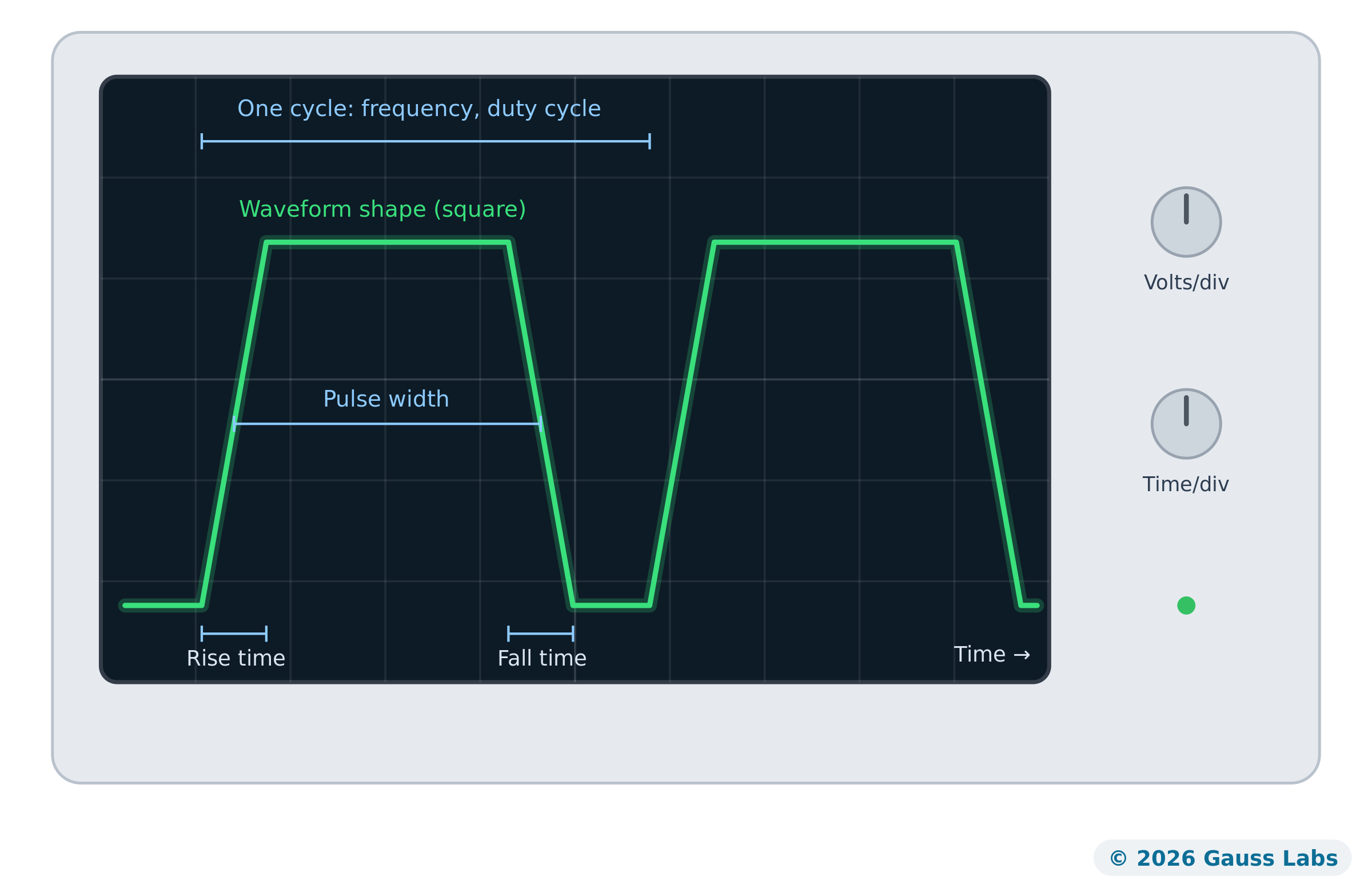
4. Testing: we measure the field and the pulse.
Your device runs on calibrated instruments in our lab, where an engineer sweeps a probe outward from the center of the accessory in four directions. The point spacing stays fixed inside the accessory and widens past its edge, and that grid is what gives us the shape of the field rather than only its highest value.
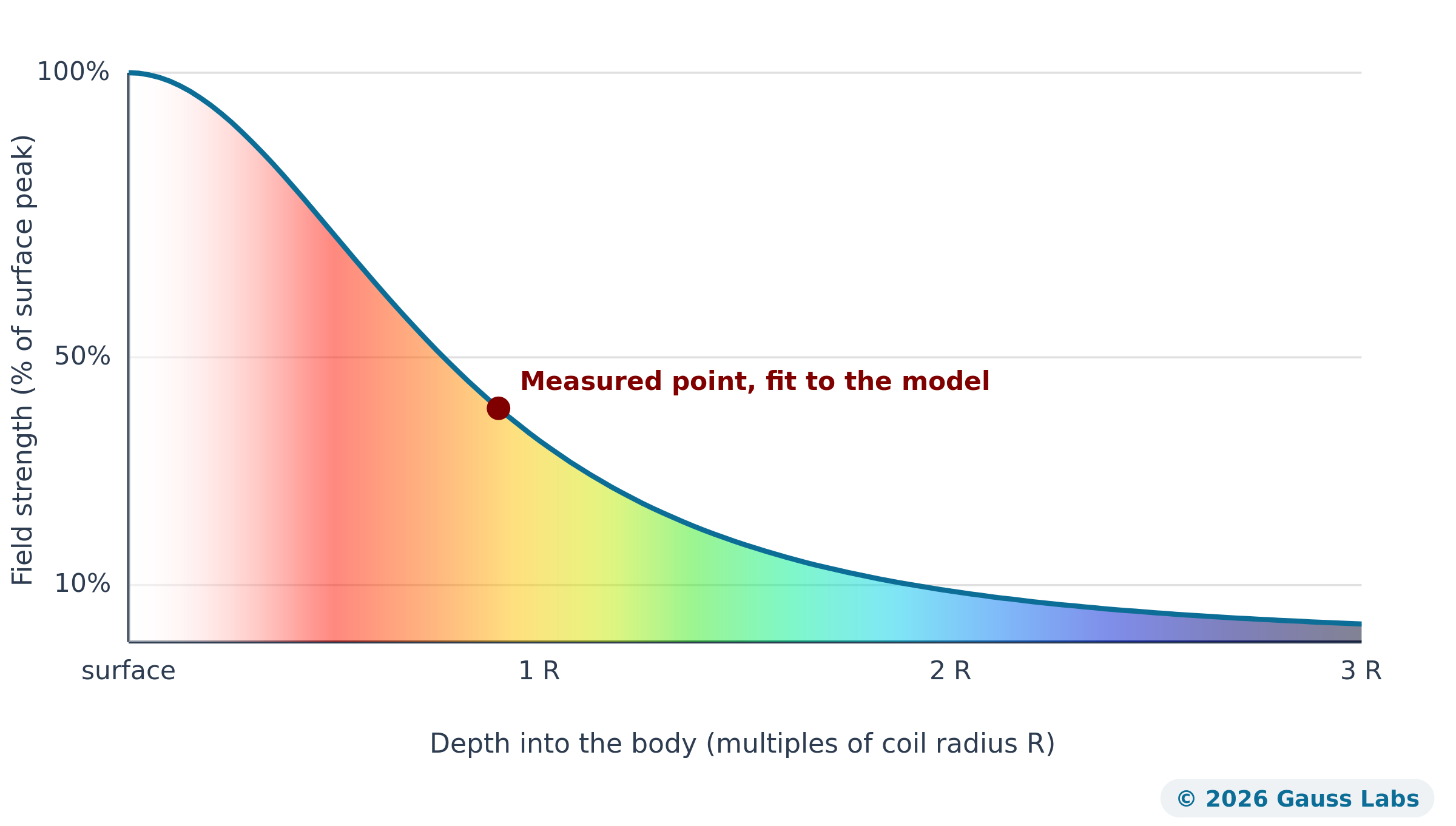
When the test includes scans at set standoff distances above the surface, the report can also show how far the usable field reaches from the accessory. That part is optional, and when it isn't measured we leave it out rather than estimate it.
5. Review: you see the draft before it's issued.
We share the draft with you before it's final, so nothing in the finished report is a surprise. If something factual about the hardware is wrong, a model name, a setting, or a dimension, this is where we hear about it and correct it. The measured results are what the instruments recorded, so those stand as measured.
6. Final: the report is issued.
The measured metrics, the charts built from your scan data, and the per-setting detail come together in one document, written for the person on your side who has to explain the device to a buyer.
7. Certification review: your measurements go against a published rubric.
If you asked for certification, the verdict is a pass or fail computed from your data against a published, versioned rubric, not a grade somebody assigns. Above the pass floor the rubric sorts capability into advisory use-case tiers, so a gentle wellness accessory still certifies. It certifies as a wellness-tier device, which is what it is.
8. Your sign off: nothing goes public without you.
You approve the certification before it appears anywhere. Nothing about your device is published unless you say so.
9. Live: your certification gets a page a buyer can check.
Your certification lands on the public registry with its own verification page. When someone asks whether the certificate is real, they can confirm it themselves, which is the entire point of having one.
What comes back.
You get the complete report, plus every chart as a separate high-resolution file, so you can put a measured result on a product page or a spec sheet without handing over the whole document. You also get an interactive 3D view of the field around your accessory, a certification badge, and a permanent listing in the public registry. If you'd like to see all of that before you commit, you can read a finished report end to end.
Your report and your measurements stay yours.
We don't share your report or your detailed certification data with anyone. The one thing we publish about your device is the certification and its verification checklist, and only after you've approved it. Every measured value stays between you and us, and there's more detail on who sees your report and who doesn't.
We only report what we measured.
We won't compare your device to one we haven't measured ourselves, and we won't quote a range we didn't record. If you want a side-by-side, send us both and we'll test both.
Ready to see what your device actually puts out?
Tell us the device and the accessory you want measured, and we'll walk you through the scope from there. If you'd rather see the deliverable first, our example reports are open to read in full.
Schedule a Call See Example Reports