
Prove what your PEMF device actually does.
You know your device works. Your buyers want more than your word for it. We measure the field your accessory produces, capture the pulse your device fires, and hand you the full report along with every chart as its own file. You decide how much of it your customers see.
Schedule a Call See Example Reports
Every report opens with the four values that matter most.
These are the headline charts from a real Gauss Labs report, not a mock-up. Every one is measured, and comes with a plain-language explanation of what it means for the device/accessory pairing.
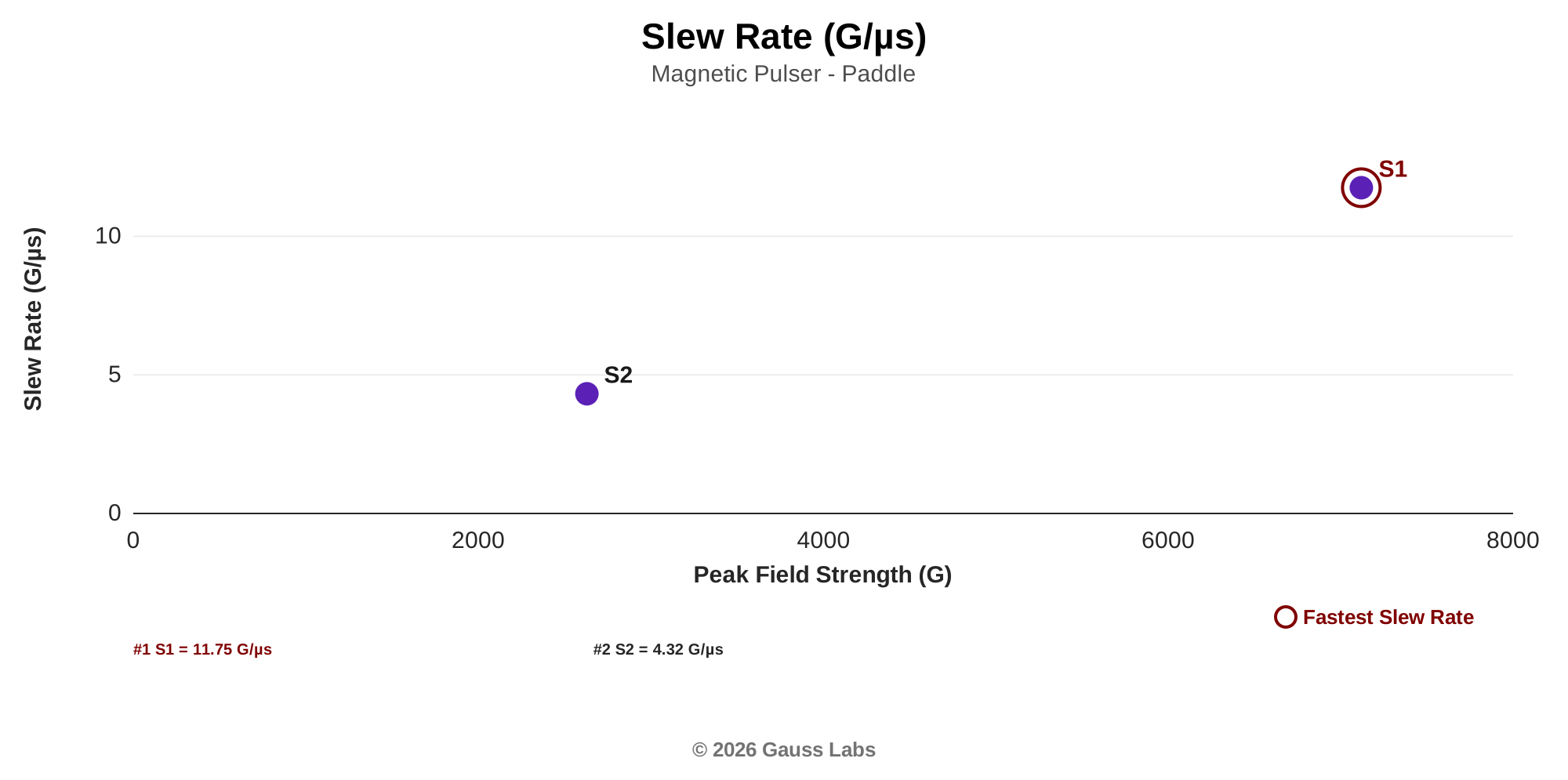
Slew rate is how fast the field changes during each pulse, measured in Gauss per microsecond (G/µs). Think of it like a hose: a sudden burst of water hits harder than a slow steady stream, even at the same pressure. What reaches tissue tracks how quickly the field changes, more than how strong it gets.
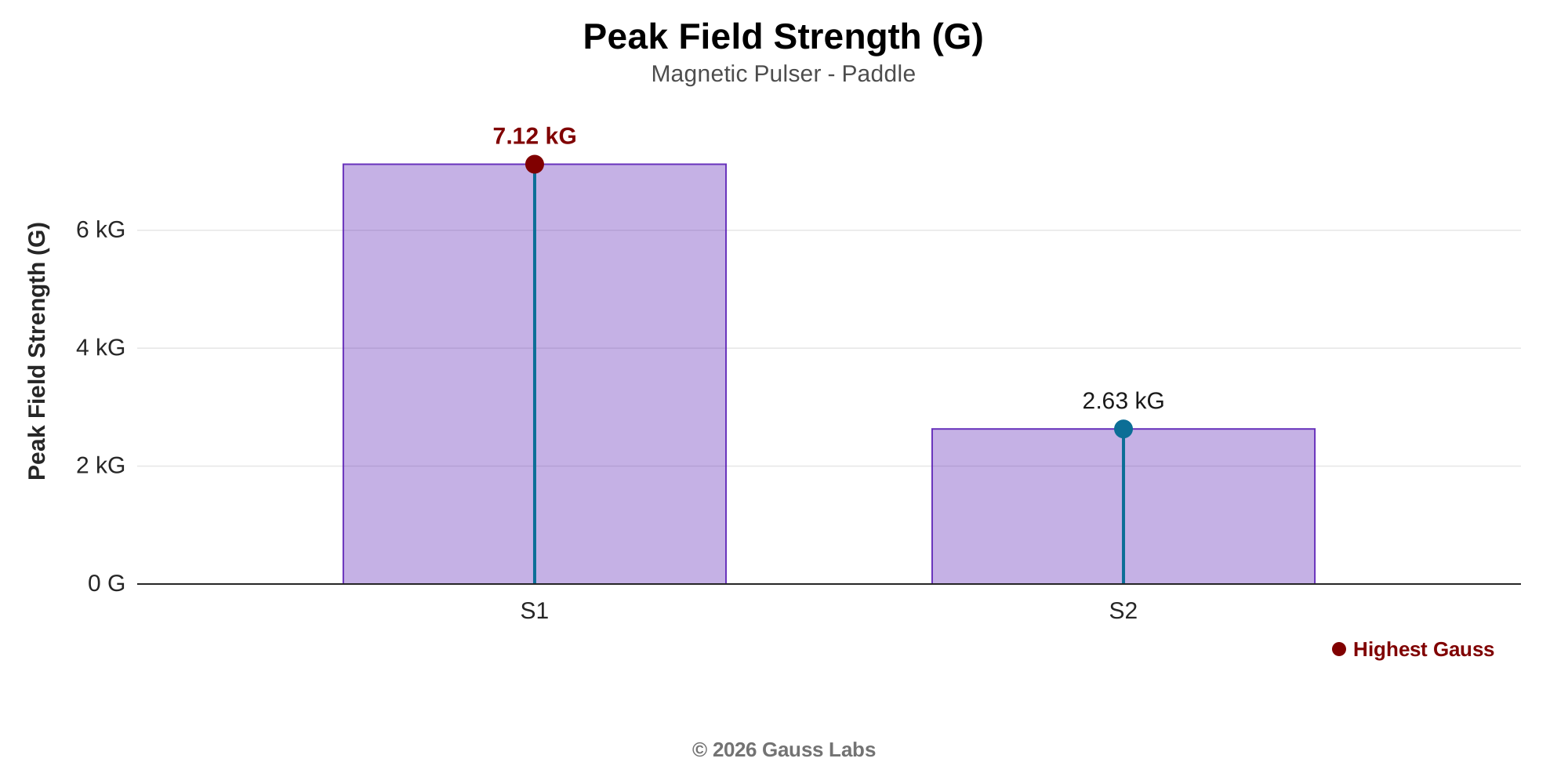
Peak field strength is how strong the magnetic field gets at its highest point, measured in Gauss (G). Think of it like the volume on a stereo: turning it up makes the music louder and the beat hits harder. Higher peaks carry more energy per pulse and keep the field above a usable level farther from the surface.
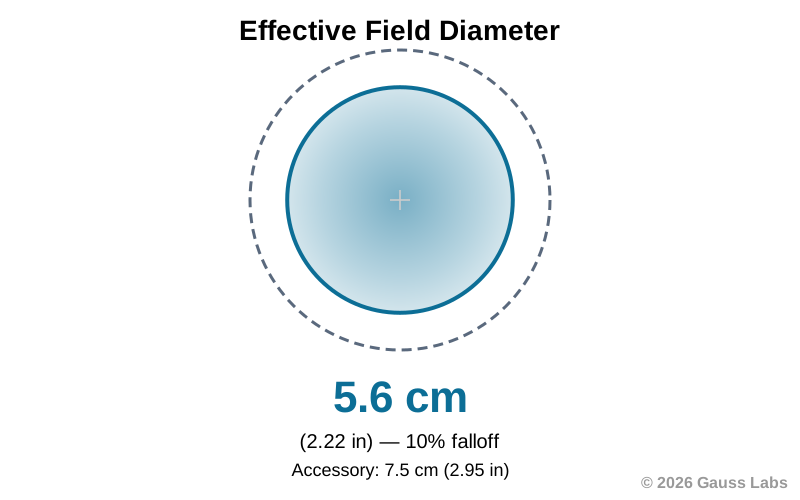
Effective field diameter is how wide the useful field is, the span where the field stays above 10% of its peak strength. It shows how much of the target area a single placement covers. The filled circle is the effective field, and the dashed ring is the accessory housing.
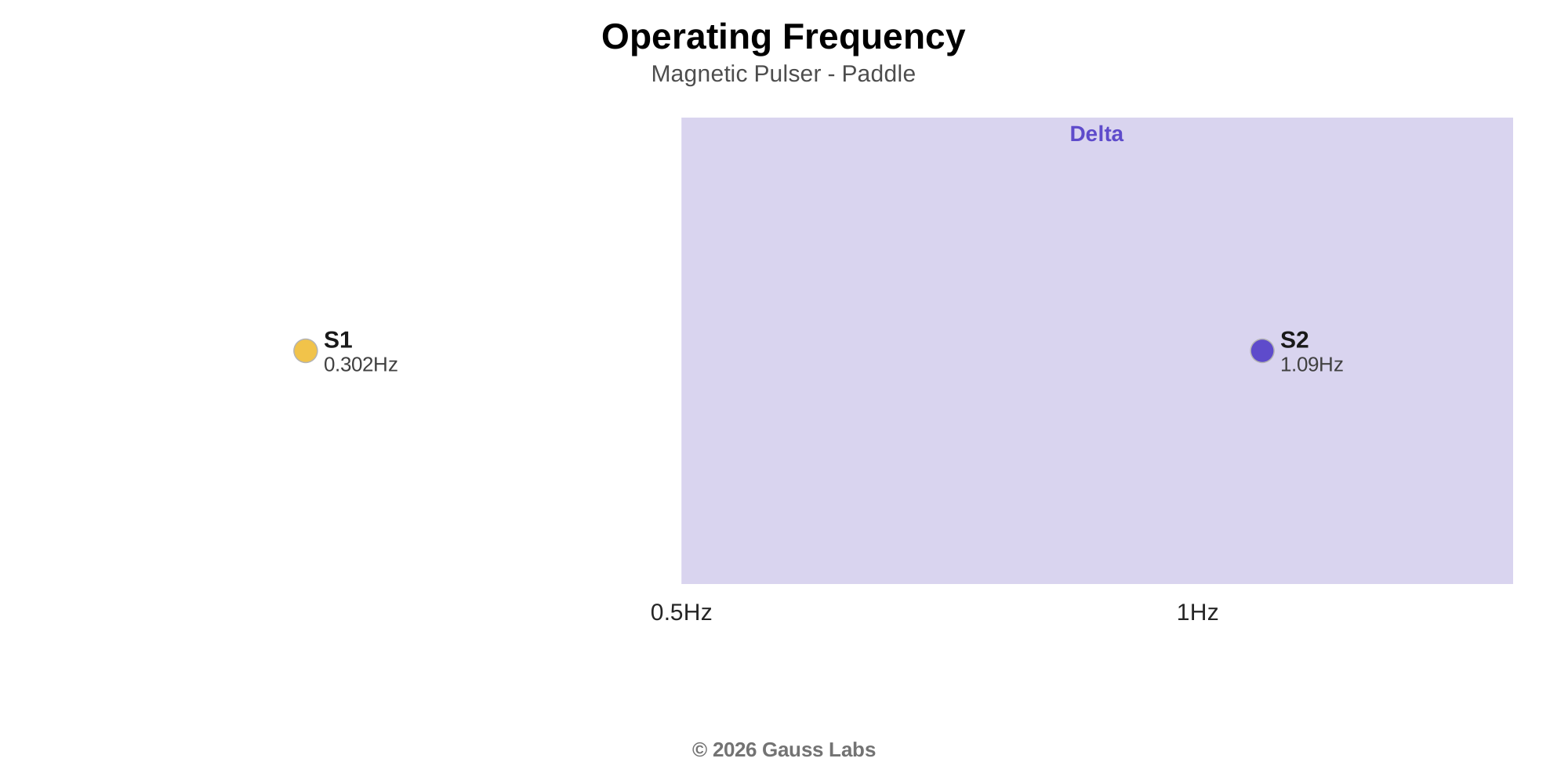
Operating frequency is how many pulses the device fires each second, measured in Hertz (Hz). The band names here (Delta, Theta, Alpha, Beta, Gamma) come from EEG naming and mark where each setting's frequency falls.
Slew rate, peak field strength, effective field diameter, and operating frequency, from an example report you can open in full.
A spec sheet gives you one of these, at best, and usually just the peak. The report gives you all four, at every setting the device offers, with the measurements behind them. See the full report.
What we measure, and what you get back.
We test the device and the accessory together, because the pairing is what reaches the body.
We scan the field across the accessory's surface and outward and upward from it, and we capture the pulse on an oscilloscope. From that, at every setting your device offers, we report how strong the field is, how far it reaches, how evenly it covers the target, how sharply the pulse rises, and how often it fires.
Then we check all of it against what your specification claims. When the measurements line up, you have proof. When they don't, you see it privately, with the data behind it, and you decide what to do next. That is what testing is for, and you can read every step of it.
In the report these appear as peak field strength, total effective flux, concentration score, effective field diameter, field symmetry, rise and fall time, slew rate, peak dB/dt, and operating frequency, each with a plain-language explanation.
The complete report, every chart as a separate high-resolution file, a certification badge for your product and your site, and a permanent public listing in the certification registry.
The full report runs deep, and it's yours. Most manufacturers keep it as the internal reference and publish only what their buyers actually need: the headline charts, the badge, and the registry listing that proves it all. What you share is your call.
Manufacturers who have put their devices on our equipment.





Every certification is permanent and public. A buyer who sees the badge on a product can open the record behind it and check the certification number, the date, and what it passed. See the full certification registry.
There was no standard for PEMF performance. So we built one.
Two devices can quote the same peak Gauss and deliver completely different fields, because the peak says nothing about the shape of the field or the shape of the pulse. Without a shared method, a spec sheet is only a claim, and nobody can check it.
So we fixed the method. Every device we test goes through the same scan grid, on the same calibrated instruments, against the same certification criteria. Nothing changes from one client to the next, and the full procedure is written into every report. That is what makes it a standard: not an opinion about what counts as good, but one method applied the same way every time, and open to anyone who wants to check it.
Three steps, and we handle the rest.
1. Schedule a call. We talk through your device, its settings, and the accessories you want characterized. You get a proposal with the scope and the timeline written down before anything ships.
2. Send us your devices. We coordinate the shipping in both directions.
3. Review your results. You get the report, the charts, the badge, and your listing in the public registry.
You know your device performs. Now you can show it.
Tell us about your device and we'll scope a test. Or look at a finished report first and see exactly what you'd be getting.
Schedule a Call See Example ReportsChecking a badge you saw on a product? Look it up in the certification registry.
Gauss Labs certifies measured device performance. Certification is not a medical or regulatory clearance.