
The accessory, not the device, sets the peak field you actually get.
When a PEMF device advertises a peak field, that value belongs to the device paired with one specific coil. Swap the coil and the peak can more than halve, with nothing else changed. We measured exactly that: one device, two of its strip coils, everything else held constant.
Same device, two coils, and the peak drops by more than half.
We measured a 2.4 Tesla BBMPulser 5B, a high-intensity device we bought for our own testing, with two of its strip-coil accessories. The driver stayed identical. Only the coil changed. With the Classic 3-inch strip coil, the field peaked at 22,410 Gauss at the top setting. With the 7-inch strip coil, it peaked at 8,670 Gauss. That's less than half, and the only thing we changed was the accessory.
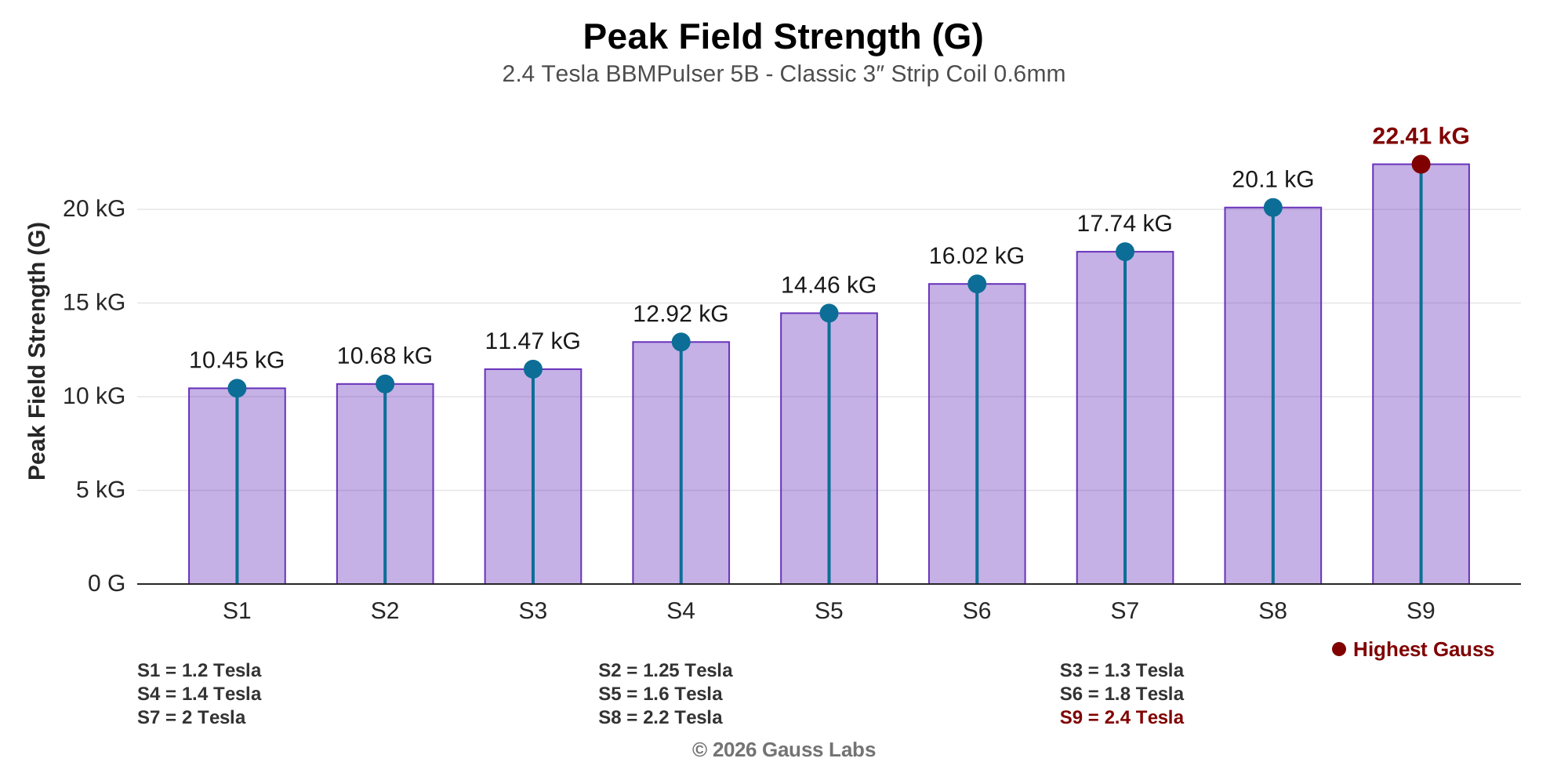
Both coils ran the same nine settings over the same 0.4 to 1.76 Hz range. So the device's headline strength, the figure a spec sheet leads with, isn't a property of the device on its own. It's a property of the device and the coil together.
The higher peak is the smaller field.
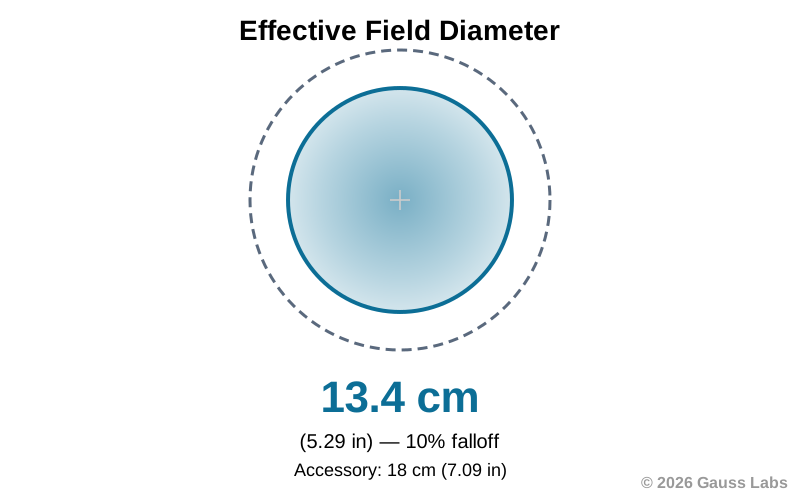
Read only the peak and the 3-inch coil wins by a wide margin. Measure the rest and it turns over. The 7-inch coil spreads its field across a 134mm (5.3 in) effective diameter, more than double the 3-inch coil's 60mm (2.4 in). It also puts out about 9.5 milliweber of total field to the 3-inch coil's 4.9, again close to double. The smaller coil concentrates a tall, narrow field. The larger one produces a lower, wider one that adds up to more overall.
Neither coil is the loser here. One is built to concentrate a strong field on a small spot, the other to cover a broad area. The peak alone would have told you the opposite of what the coverage shows. If that trade sounds familiar, it's the same one behind choosing a coil for a large animal.
So a strength figure needs a coil and a setting attached.
This is why a bare peak value is hard to act on. A device advertised at "22,000 Gauss" is quoting its strongest coil at its top setting. Pair that same device with a wider coil, or run it lower, and the field you actually get is a different value. Before you compare two devices by strength, ask which accessory produced the figure and at which setting. A measurement report answers both, coil by coil and setting by setting. A headline figure answers neither.
One thing the two coils share is an even field. The 3-inch measured 93 percent field symmetry and the 7-inch 95 percent, so in both cases the field reaches evenly around the center rather than leaning to one side. The difference between them isn't evenness. It's how each accessory trades peak for spread.
Want the peak measured on every coil you sell?
We measure peak field, coverage, total field, and symmetry for each device-and-accessory pairing, and publish the full report. If you'd like to see what a complete measurement looks like, our example reports are open to read.
Schedule a Call See Example ReportsA device's peak field is real, but it's only half the label. The other half is the coil that produced it.