
One peak Gauss measurement describes one Gauss measurement of a Device/Accessory Pairing. Our report goes into significantly more detail.
You’re comparing two pulsed devices, and each spec sheet prints one peak Gauss figure. Gauss is the unit we use for magnetic field strength, and the peak is the highest the field gets. That figure is one measurement of one Device/Accessory Pairing, meaning a device with a particular accessory attached, and it can’t tell you how fast the pulse rises, how long it lasts, or how often it fires. To show what a full report adds, we’ll use a Magnetic Pulser MP7 from our lab (a unit customized for our own experiments), with every number taken from its report. We’ll go in four steps: the peak, the shape of the pulse, how often it pulses, and how far the field reaches.
Each setting of a pairing has its own peak.
A pulsed device doesn’t hold its field steady. It sends out short bursts, and each burst is a pulse. The peak is the highest the field reaches during a pulse, and we read it in Gauss (G), where 1 kG is 1,000 G. A Device/Accessory Pairing is the device together with the accessory fitted when we measured it, since the same device makes a different field with each accessory. The MP7 pairing has two settings and so two peaks, and a sheet that prints one has to say which.
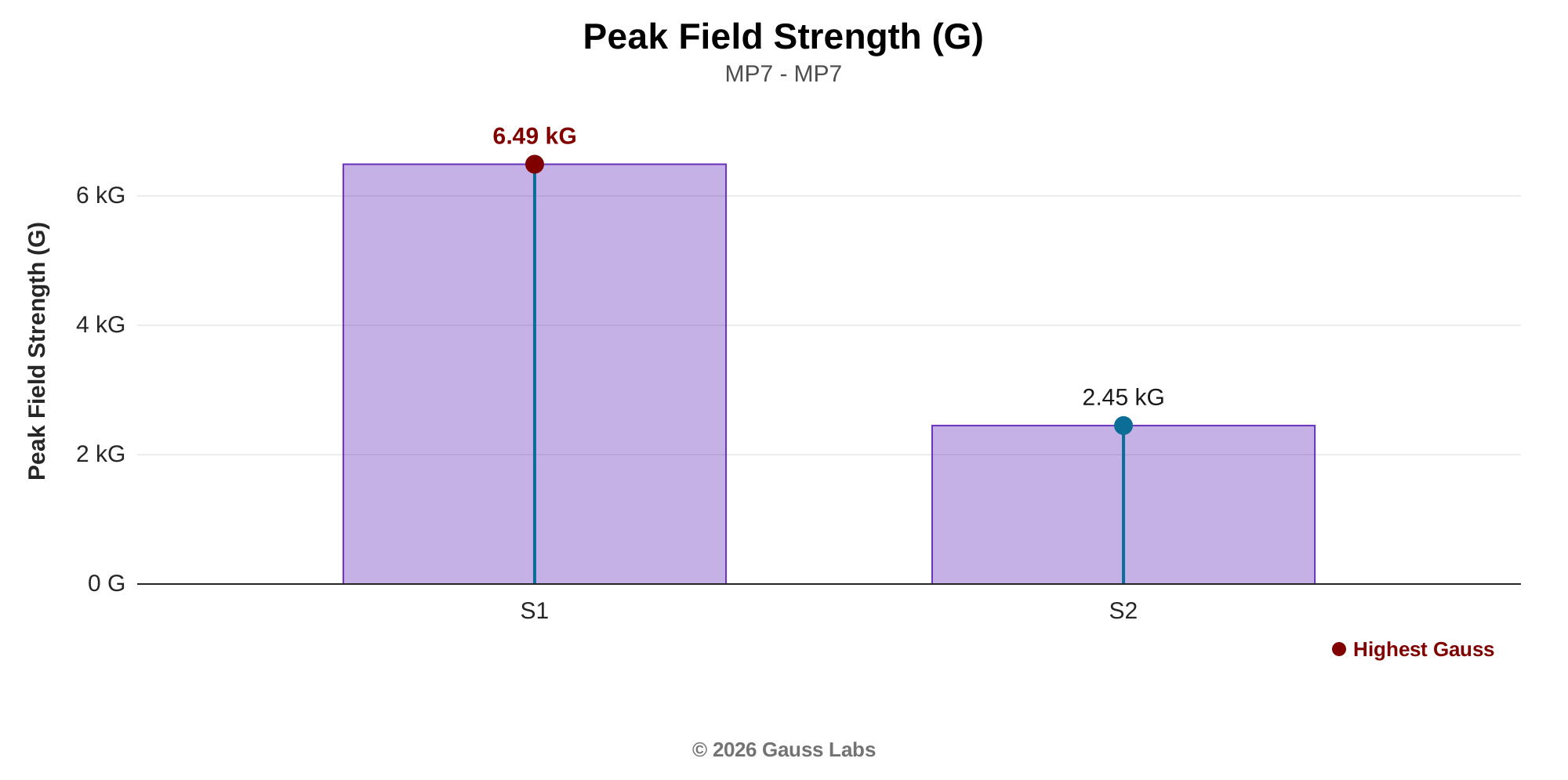
Setting 1 peaks at 6,490 G and setting 2 at 2,450 G. A sheet that printed only 6,490 G would leave out a setting that is a little more than a third as strong. Both settings send a pulse shaped like a saw blade, where the field climbs quickly and then fades slowly (the technical name is a sawtooth wave).
You’ll run the device at one setting, and a sheet that quotes the other setting’s number describes something you aren’t using. Knowing the setting and the accessory is also the only way to compare two devices fairly.
The peak doesn’t say how the pulse is shaped.
Next is the shape of the pulse. Two pulses can reach the same height and still behave differently, because one gets there much faster. The rise time is how long the field takes to climb to its peak, and the fall time is how long it takes to die away again. A microsecond (µs) is a millionth of a second. The table puts both settings side by side (report T2609191800).
| What we read | Setting 1 | Setting 2 |
|---|---|---|
| Peak field | 6,490 G | 2,450 G |
| Time to rise | about 468 µs | about 445 µs |
| Time to fall | about 3,380 µs | about 2,939 µs |
| Time between pulses | about 3.6 seconds | about 1 second |
| Share of the time the field is on (duty cycle) | 0.05% | 0.17% |
On setting 1 the field climbs quickly and then takes about seven times as long to fade. Setting 2 has the same shape at a lower height and a faster pace. Two devices can print the same peak and still deliver very different pulses, so the rise and fall are what let you compare the pulse itself. They are also what to ask for when a maker advertises a sharp or fast pulse. We make the wider case that a higher peak does not automatically beat a sharper pulse in our post on Gauss value and pulse.
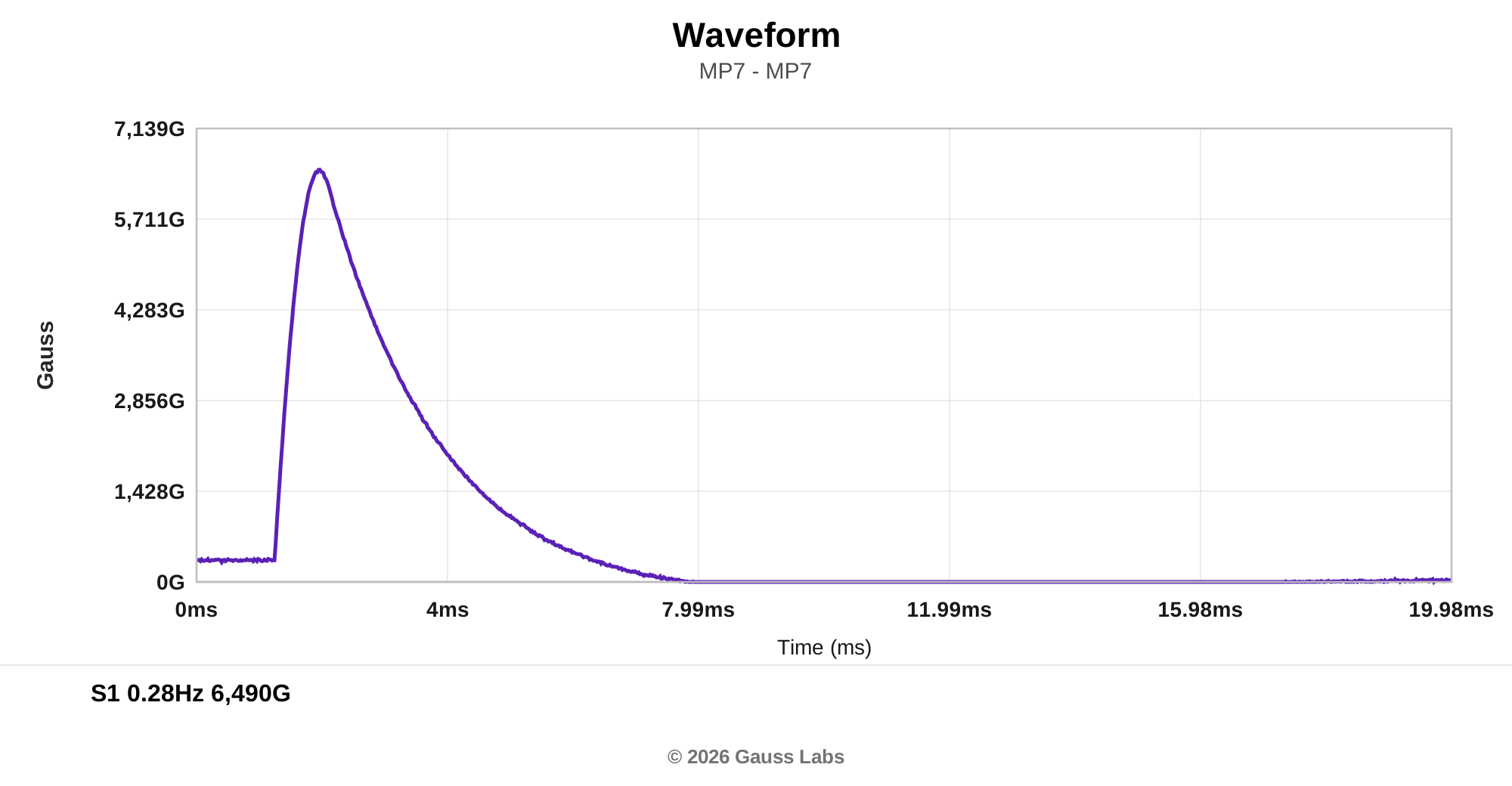
The field is on for only a small fraction of the time.
Third is how often the pulse repeats. Between pulses the field rests. The share of each cycle that the field is on is the duty cycle. On setting 1 it’s 0.05%, about one part in two thousand, and on setting 2 it’s 0.17%. The peak describes the instant the field is strongest, not how much of the time it is on, so it can’t be read as a steady strength, and two devices that pulse at different rates can’t be compared on the peak alone.
How far the field reaches is a separate question.
Last is how far the field reaches. So far we’ve described the pulse over time. How the field spreads out from the accessory is a different measurement, and we cover it for this same accessory in our post on the falloff curve, which reads the field at five heights and in every direction. The field is strongest at the accessory and weakens with distance, so a peak read at the surface doesn’t tell you what reaches the distance you’d actually use it at.
These numbers describe what the device puts out. A higher peak is a bigger number and not a better device, and we don’t tie a pulse rate to an effect in the body.
Ask for more than the peak.
A single figure can be perfectly honest and still tell you little. These four questions work on any pulsed device, and our glossary of twenty terms explains the words in them.
Four questions for any pulsed device.
- “Which setting and accessory does this peak belong to?” A device with two settings has two peaks, and a different accessory changes the field. Ours read 6,490 and 2,450 G.
- “How long does the pulse take to rise and to fall?” A sawtooth pulse climbs and fades at different speeds, so one time covers only half of it.
- “How often does it pulse, and how much of the time is the field on?” A pulse every few seconds with the field on for a fraction of a percent of the time is a different pulse from a steady stream.
- “How far does the field reach?” A peak is read at one spot, so ask for the readings at several heights and in several directions.
Want the same measurements on your device?
We measure every setting of a device with each accessory and report the rise and fall and the duty cycle alongside the peak. If you’d like to see the measurement work first, our example reports are open to read.
Schedule a Call See Example ReportsWhen a pulser’s sheet gives one peak Gauss figure, ask which setting and accessory it belongs to and what the rest of the report says.