
You can now see the field shape each kind of coil makes, and view it in 3D.
Two PEMF discs can look identical on the outside and still put their strongest field in completely different places, because where the field lands comes down to how the wire inside is wound. A spec sheet won't show you which one you're getting, so our 3D field viewer is now open to anyone, with a page for each of the four common coil types built from a real Gauss Labs scan. You can rotate each field, cut it open, and watch it pulse in time with the waveform we measured.
Two discs can look the same and put the strong field in opposite places.
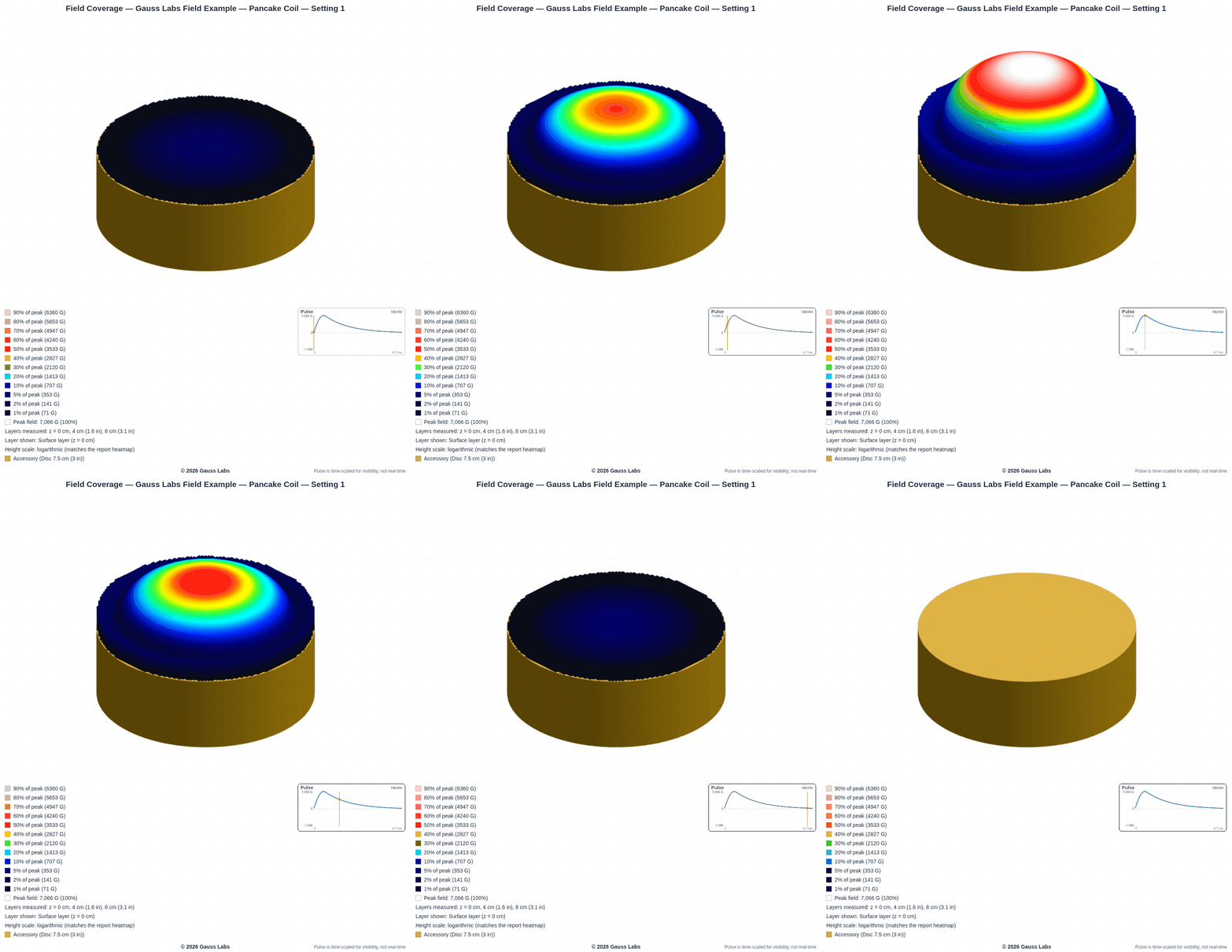
A pancake coil is wire wound into a flat spiral, and the turns stack up over the middle, so that's where the field is strongest and it falls off as you move outward. The viewer draws a measured layer of that field as terrain, with height and color both standing for strength, and a pancake comes out as one hill with the ground sloping away on every side.
Wind that same wire into a ring with an open center and you have a donut coil, which is where it gets interesting, because a donut disc and a pancake disc can look identical from the outside. A magnetic field forms around wire that carries current, so with nothing running beneath the middle, the field peaks in a ring and sags over the hole. It's the same terrain view, and it's a completely different landscape.
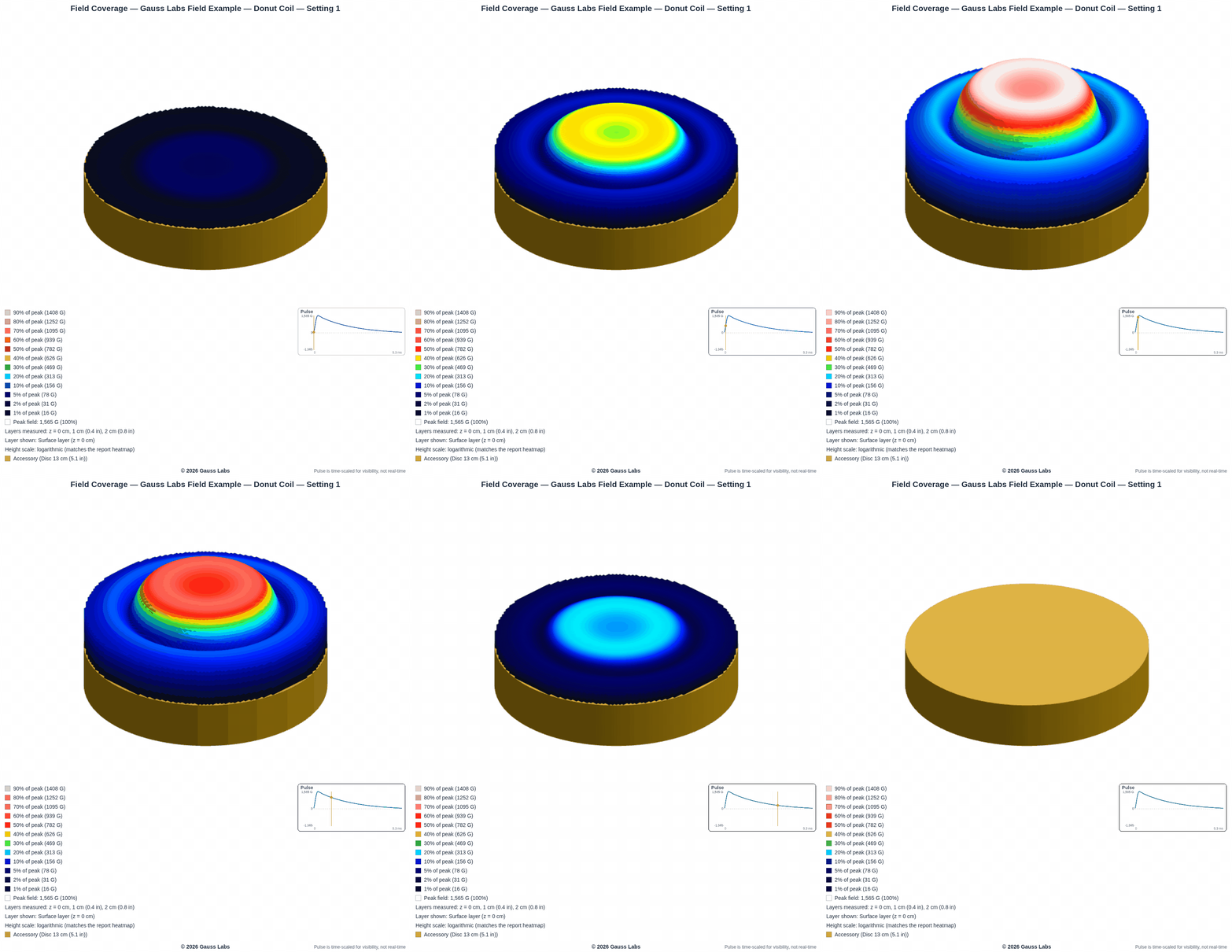
That difference shows up the moment you set one down on a sore shoulder. With a pancake you put the peak on the spot, and with a donut you put the dip there while the strong field lands in a circle around it. Neither is the wrong choice, but you want to know which one you're holding.
With a loop coil there's nothing to aim.
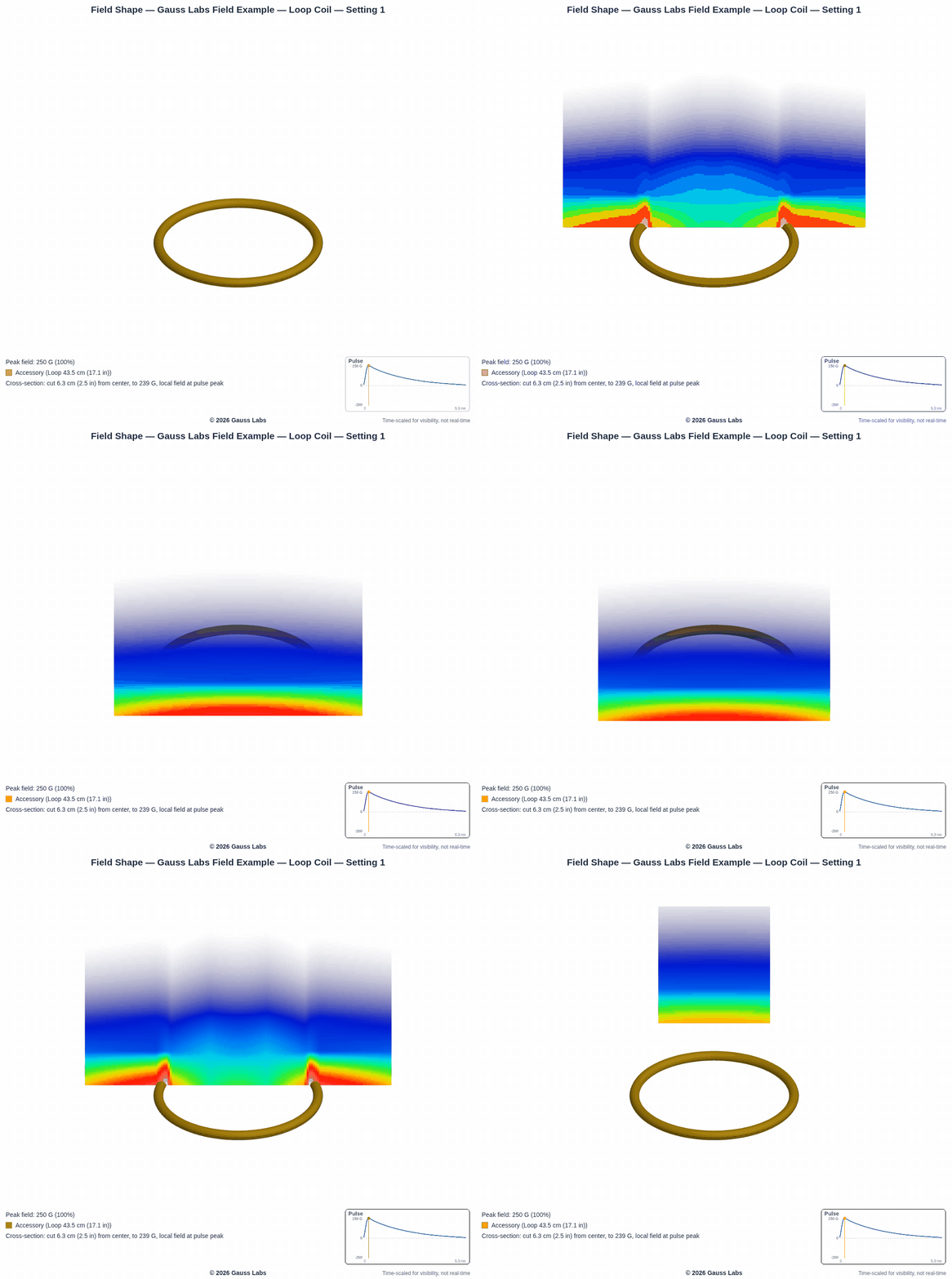
A loop coil is a single large ring that slides over an arm or a leg, so the field passes through the opening from every side instead of rising off a surface you have to center on a target. Open the cross-section view and you can watch the cut travel through the field, which fills the ring's opening and runs strongest close to the wire before dipping right at the center. That's why loops turn up on horses' legs and on human knees and elbows: you put the limb inside the field rather than lining anything up.
With a mat you're buying area instead of peak.
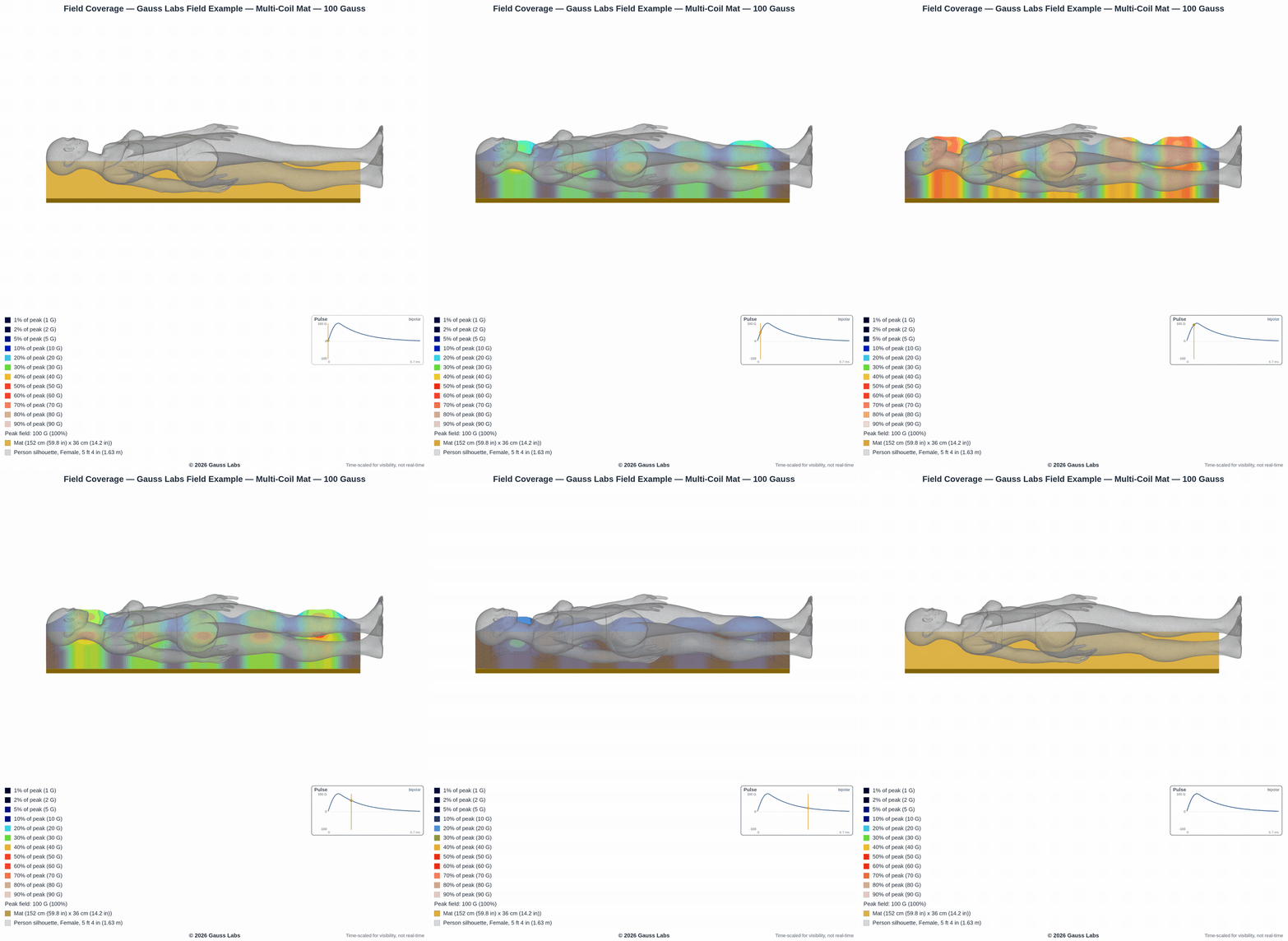
A multi-coil mat holds many coils in one pad, each producing its own field, and together they cover most of a body at a peak far below what a single focused disc reaches. The mat page adds a canopy view that draws the whole pad as one surface, so you can watch the field rise over each coil and sag in the gaps between them. Those gaps are what a coil count on the box will never tell you about, and how even the coverage is is most of what you're paying for.
None of these shapes is a drawing.
PEMF marketing is full of field pictures, and most of them are illustrations someone made to look plausible. These four came off a scan: a probe swept across each accessory along scan lines at a fixed standoff distance, then again at layers above it, so the shape you're turning around is where we actually measured the field.
There are two things worth saying plainly. Each example is a real Gauss Labs measurement relabeled as a generic coil type with a made-up device name, because the detailed field data for a customer's own device and accessory stays with that customer, so read these as what a winding produces rather than as any product's spec. And a mat gets scanned along lines, which leaves the space between the lines to be reconstructed, so the viewer names which reconstruction you're looking at instead of letting you assume the whole picture is measured data.
Open the page for the accessory you're shopping for.
Drag the field around, cut a cross-section through the part you care about, and then hold what you see up against the picture in the brochure. If the two disagree, that's a reasonable thing to ask a manufacturer about. And if you missed how the viewer got here, the earlier posts cover rotating a field and playing its pulse, then slicing it open next to a real body.
Interactive 3D field volumes measured by Gauss Labs, one for each common coil type. Pick a coil type, then drag to rotate and scroll to zoom the real measured field.
A ring of wire. The field rises through the opening and dips right at the center.
Want your accessory's field shown like this?
The coil-type examples above are open to everyone. When we test and certify your device and accessory, the measured scan also becomes your report, your charts, and an interactive 3D view of your own field, and that one is yours, so you can see how each pairing actually performs. Our example reports are open to explore.
Schedule a Call See Example ReportsYou no longer have to take a brochure's word for the shape of a field. Turn it around and look at it yourself.