
A PEMF mat is sealed shut, and its field can still be measured from the outside.
You're comparing mats, and sooner or later a guide will tell you that a sealed mat can't really be checked, so the best you can do is weigh up which brand documents itself more thoroughly. That part is worth pushing back on, because the field you're trying to check sits in the air above the pad, which is exactly where a probe can reach it.
The mat advice you're reading is right until its last point.
Mat guides have improved noticeably this year, including some written by the companies selling the mats, and they'll tell you that coil count is a hardware figure rather than a quality score, that twelve coils bunched near the middle can cover a body worse than eight spread evenly, and that two mats advertising the same Gauss value can behave differently depending on where that reading was taken. All of that is true and worth knowing, and it's a real step up from a product page that prints one value and leaves you there.
Where they stop short is the next point. The same guides that tell you coverage uniformity is what matters then explain that you can't get at it, since field maps for consumer mats are rarely published and you can't see the coil layout inside a finished mat. That's a fair description of what's usually in front of you, and it isn't a limit on what can be measured.
The field you're trying to check is outside the mat already.
Opening a mat would show you its coils, and the coils aren't really what you were asking about. What reaches your body happens in the air above the pad, which is where field measurements have always been taken, so a sealed mat can still be measured.
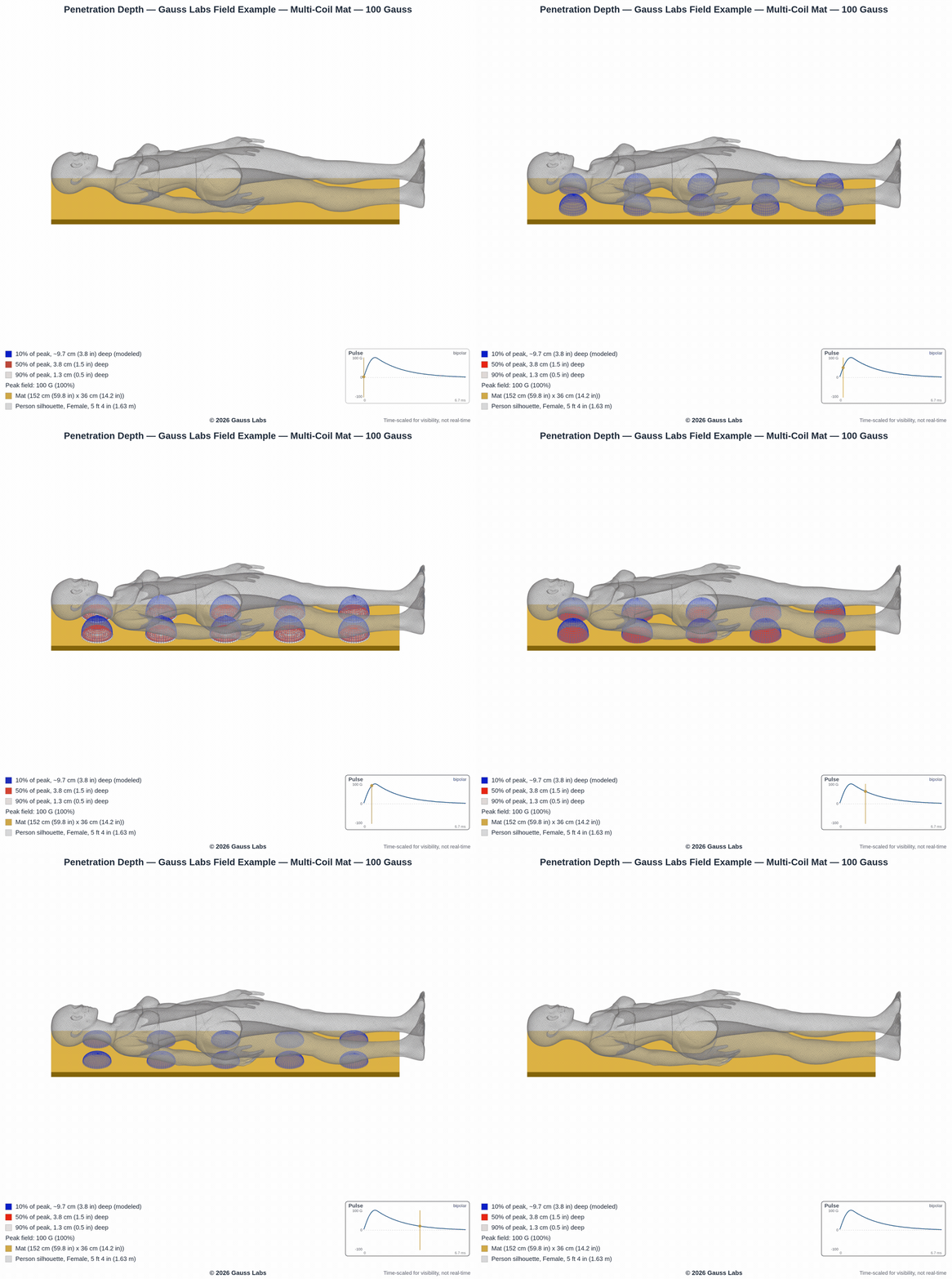
Each shell is one level of field strength, and the 90 percent shell stays within about 2.6 cm (1 in) of the pad while the 50 percent shell reaches 12 cm (4.7 in). The faintest shell drawn, at 10 percent of the peak, extends far enough to pass through someone lying on the mat. So how far a mat's field reaches only has an answer once you say how strong it still needs to be at that distance.
We map that space one scan point at a time. A probe reads a single point, so it travels on a CNC rather than by hand, and the pass repeats at every height we measure. The measurement is documented and the same for every device so that it can be repeated. If you want the detail, we wrote up how the scan runs in four directions, and why fewer than four can miss an uneven field, in an earlier post on the four-axis scan.
You can hover over every point on the mat and read it.
As of this week you can see the point Gauss values, drawn over the accessory at true scale, in our measured point viewer. It opens on the mat, and you pick a distance from the surface and hover any point to read its position from the center along with the field strength there. The same viewer tabs across to the loop, pancake and donut examples if you want to see how other shapes behave, and those are real measurements.
Every dot is a test point, and the value on it is the field strength at that point, with nothing between the dots filled in or estimated. Choose a height and you're looking at the field at that distance above the pad, which is the field a body lying on it would be in.
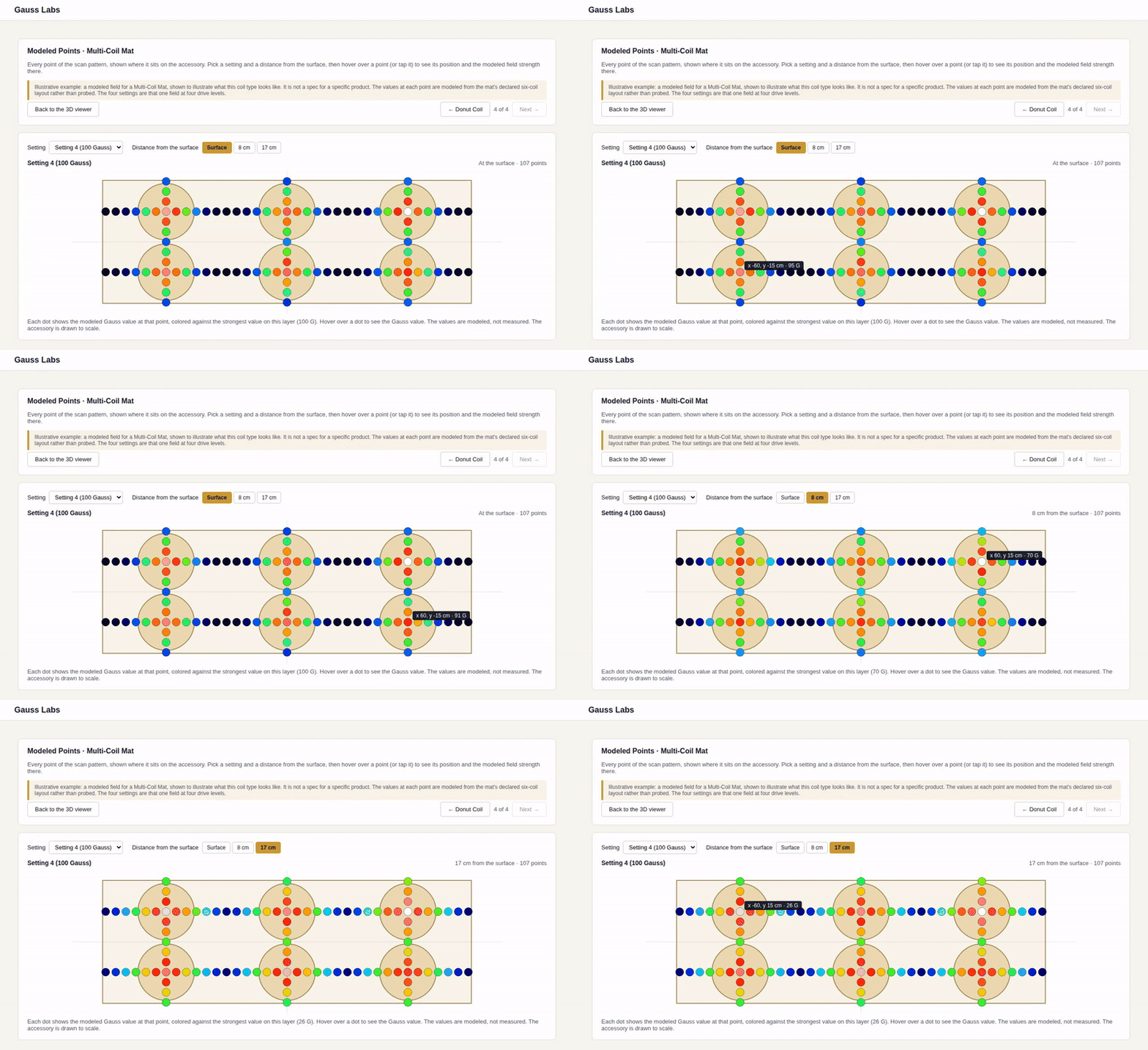
The shape that comes out is what coverage uniformity actually looks like. A multi-coil mat makes a separate strong area over each of its coils rather than one peak in the middle, the areas ease outward and downward as you step away from the pad, and the space between coils is lower than the space over them. Single-coil accessories behave quite differently, since a pancake coil peaks at the center of its spiral while a loop peaks along the ring of wire itself, which is worth a look if you're weighing a mat against a pad.
To be precise about what those examples are. They illustrate coil types under generic names, so none of them is the specification of a product you can buy, and the loop, pancake and donut carry real Gauss Labs readings shown as they were taken. The mat is the exception, since its values are modeled from its coil layout rather than probed. Each layer is colored against its own strongest reading, so a layer well away from the surface can look as vivid as the surface while having a lower Gauss output. Compare the values rather than the colors.
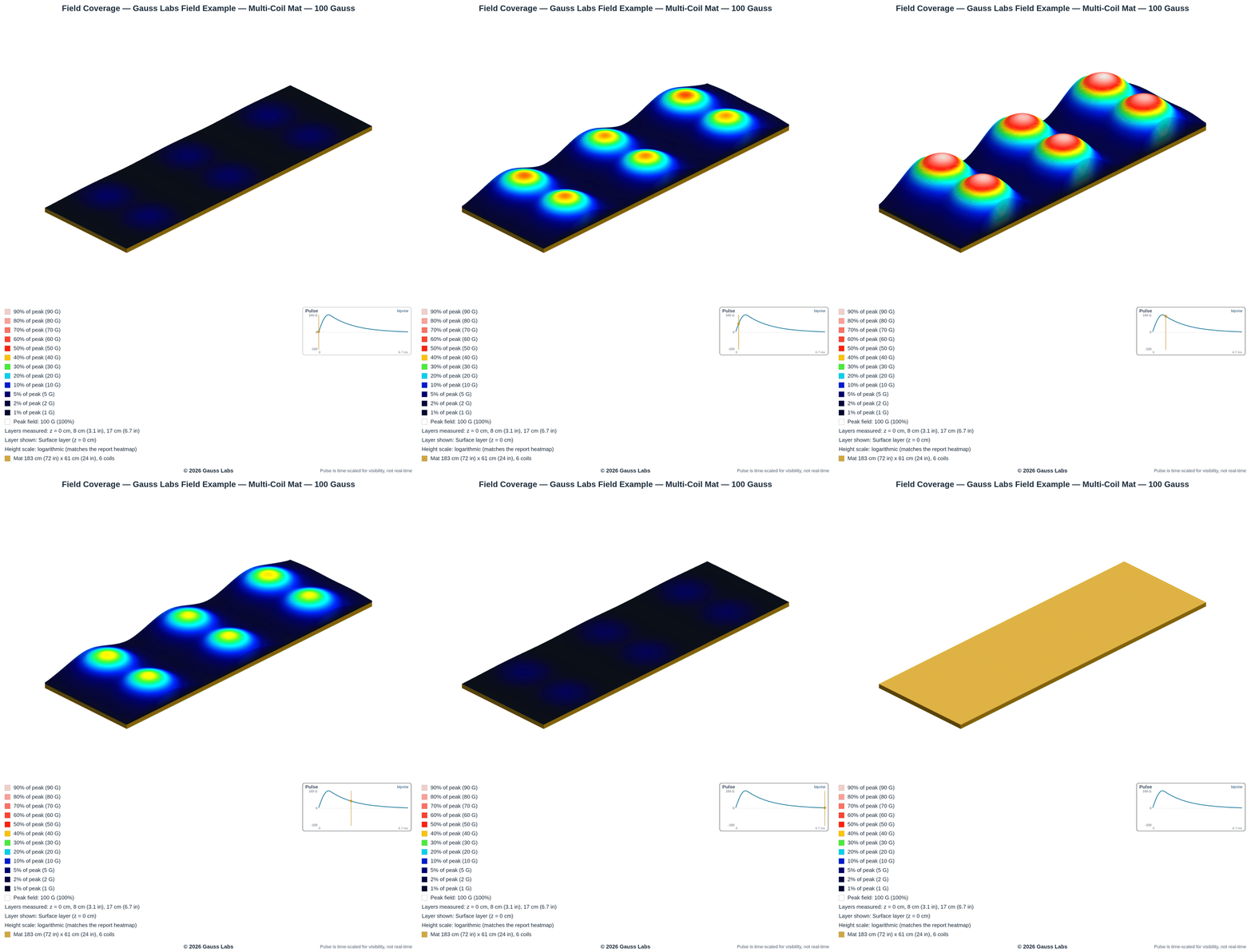
Drawn as terrain, the same readings show which parts of a body on the pad sit over a strong area and which sit in the dip between coils.
Lift off the pad and the field eases quickly.
The viewer gives you a choice of heights on the mat. On the modeled example, a point over a coil sits near 100 Gauss (10 mT) at the pad's surface, around 70 Gauss (7 mT) at 8 cm (3.1 in) up, and around 26 Gauss (2.6 mT) at 17 cm (6.7 in). Run along a row at one height and the coils differ a little from each other too.
That drop is why a peak field strength printed with no measurement distance beside it can't be compared with anything. The field eases as you move away from the wire, which is geometry rather than a fault in the mat, so a value read at the pad and a value read where your back actually sits are answers to different questions, and a spec sheet seldom says which one it's quoting.
You can check whether a mat has been measured by somebody else.
Mats are not new ground here, and full-body mats carry Gauss Labs certifications you can open on the public registry. Each listing names what was verified on that product: the pulse, the operating frequency, the field strength it delivers, the waveform, and whether the measured performance matched the documented specification. The figures themselves stay with the company that commissioned the test, so what you can read is the certification and what it covered.
That's worth doing before you buy. Look up the mat you're considering, see whether anyone other than its maker has measured it, and read what that measurement covered. If it isn't listed, that's a fair thing to ask the manufacturer about, since a test is something they can commission.
A manufacturer can put these points on their own product page.
If you're shopping and you find these points on a product page, you can hover them and read the values yourself, and they came from an independent lab rather than from the company selling you the mat. Any manufacturer who's had a product tested here can add them now, beside the 3D field they could already embed.
Four things to ask when the spec sheet stops short.
- "At what distance was this measured?" A reading at the pad and a reading 8 cm (3.1 in) up are very different on the same mat, and without the distance you can't compare one Gauss value with another.
- "What does it read away from the strongest point?" One value describes one spot, and coverage is a question about the whole surface.
- "Which accessory was fitted when you measured?" A device produces a different field with each accessory, so the pairing is what gets measured rather than the device on its own.
- "Who measured it?" A seller's own figure and an independent lab's are not the same kind of evidence.
Want your product's measured points on your own page?
We map an accessory point by point, at every setting and every height we measure, and the embed code appears in your portal the day the report is finalized. If you'd like to see the measurement work behind it first, our example reports are open to read.
Schedule a Call See Example ReportsIf a mat's product page tells you the layout matters and then tells you there's no way to check it, ask for the field map. You can't see the wiring inside a sealed mat, and its field is still there to be measured, point by point, at the height you'd actually be lying at.